Setting You Up for a Safe and Successful Experience
Our Adventure Prep page is designed to help participants feel informed, confident, and ready before stepping into any Vibe Tribe Adventures experience. This page brings together essential information—including packing lists, the 10 Essentials, weather readiness, Leave No Trace principles, and waiver requirements—so participants know what to expect and how to prepare. Whether it’s your first outdoor adventure or one of many, proper preparation helps ensure a positive, safe, and enjoyable experience for everyone.
Why Adventure Preparation Matters
Preparation is a key part of outdoor safety, learning, and empowerment. When participants understand how to dress, what to pack, and how to care for themselves and the environment, they are better equipped to handle changing conditions and fully engage in the experience. Being prepared reduces stress, increases confidence, and supports group safety—especially in outdoor settings where conditions can shift quickly.
For youth, families, and those new to outdoor recreation, the Adventure Prep page removes barriers by clearly outlining expectations and resources. It promotes shared responsibility between participants and guides while fostering independence, awareness, and respect for the outdoors. Adventure Prep helps ensure that every participant arrives ready to explore, learn, and connect—with confidence and care.

Adventure Waiver: Creating a Safe and Informed Outdoor Experience
Our Adventure Waiver is an important part of participating in Vibe Tribe Adventures programs and experiences. It is designed to ensure that all participants understand the nature of outdoor activities, acknowledge the inherent risks involved, and help our team create a safe, supportive, and well-prepared environment. By completing the waiver, participants provide essential information that allows our staff and guides to plan responsibly, respond to emergencies if needed, and support everyone’s well-being throughout the adventure.
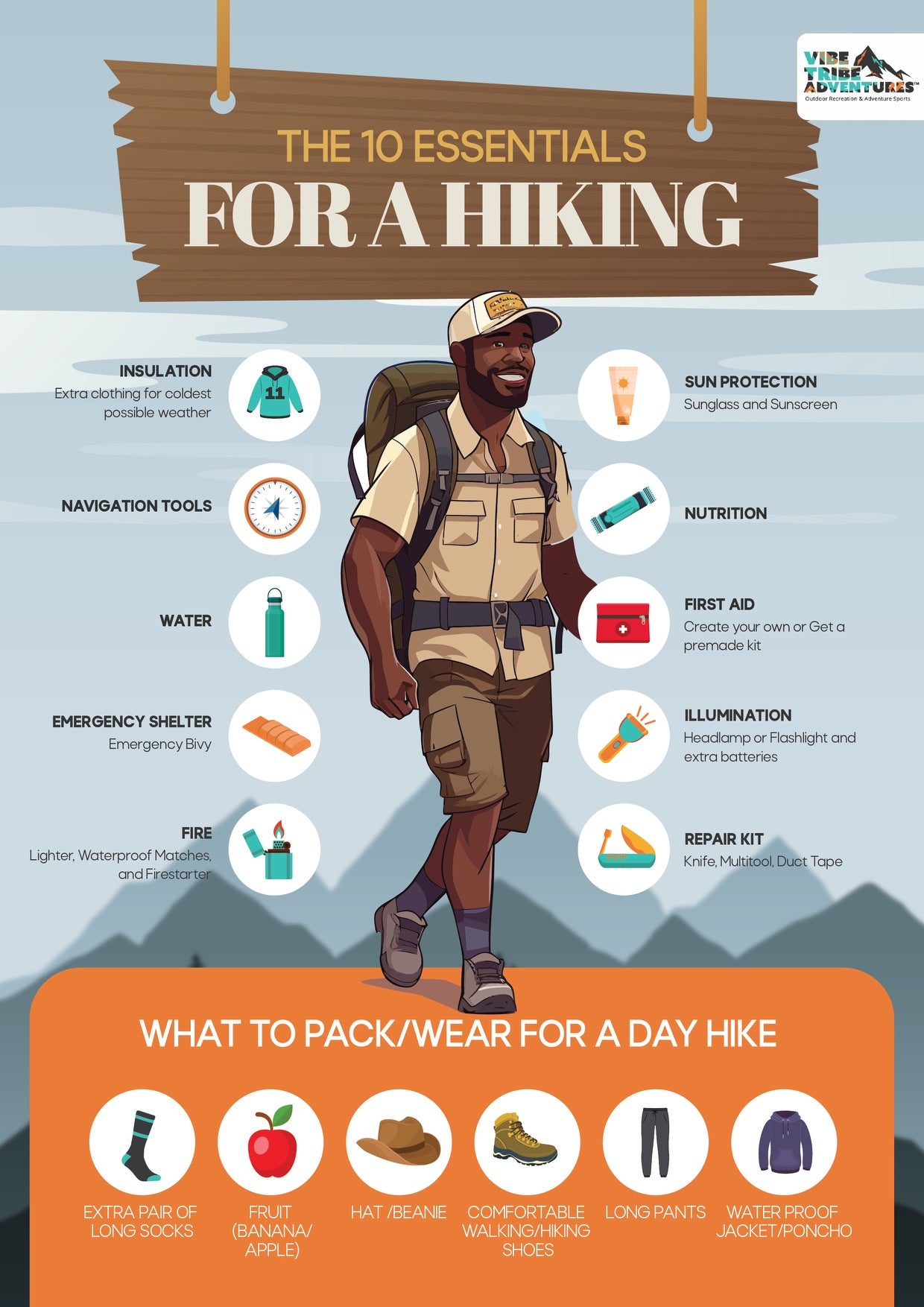
The 10 Essentials for Hiking: Safety Starts with Preparedness
Our 10 Essentials for Hiking infographic highlights the core items every hiker should carry to stay safe, prepared, and confident outdoors. These essentials—ranging from navigation and sun protection to first aid, food, water, and emergency supplies—are designed to help hikers respond to unexpected changes in weather, terrain, or timing. Whether exploring local trails or venturing into more remote areas, the 10 Essentials provide a foundation for responsible and enjoyable hiking experiences.

Leave No Trace: Caring for the Outdoors We Share
Our Leave No Trace principles guide how we explore, learn, and recreate responsibly in natural spaces. This infographic introduces the core practices that help protect trails, wildlife, and ecosystems while ensuring outdoor spaces remain safe and welcoming for everyone. From staying on designated trails and properly disposing of waste to respecting wildlife and other visitors, these principles encourage mindful, low-impact outdoor experiences.
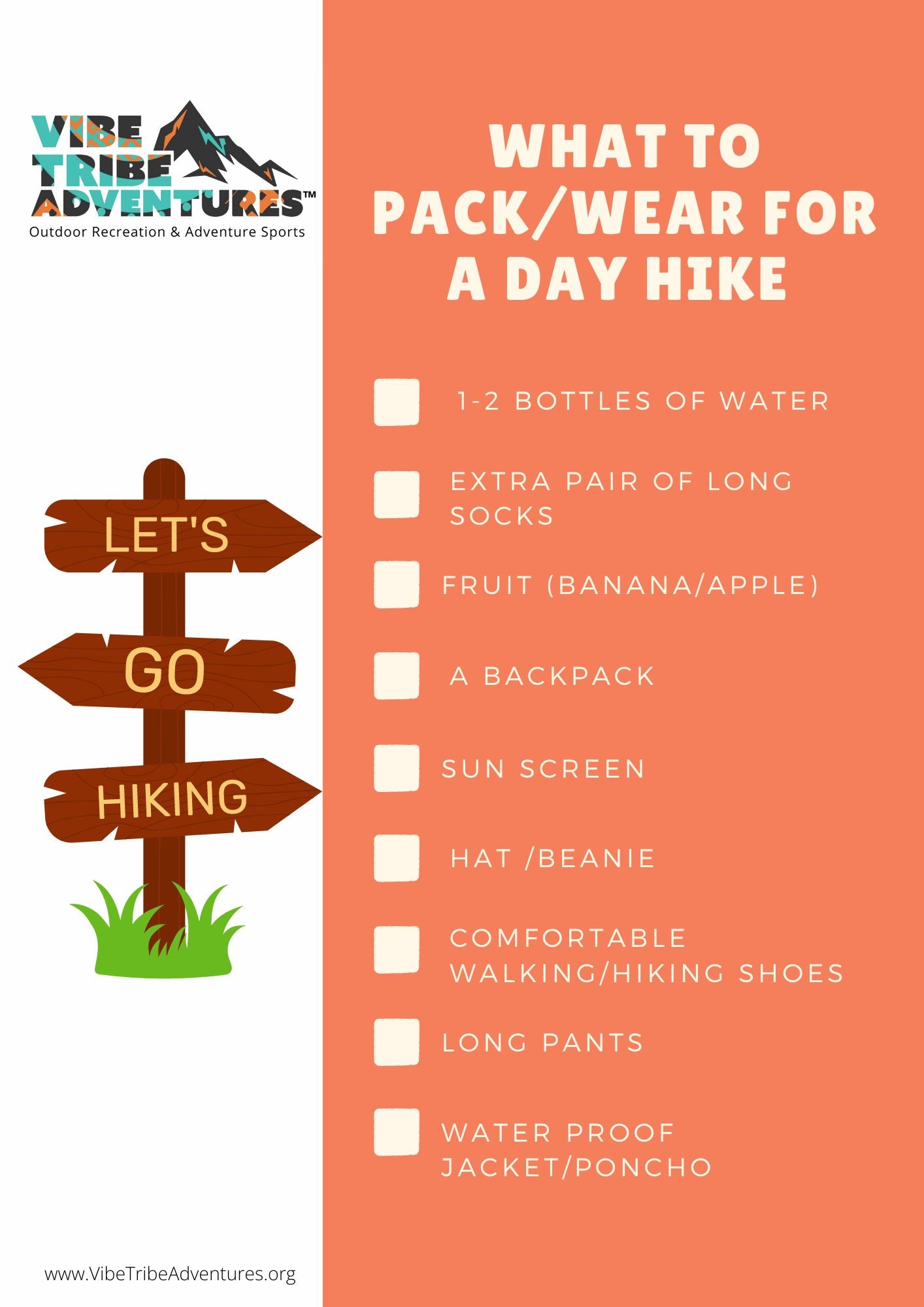
Hiking Packing List: Be Prepared for the Trail
Our Hiking Packing List infographic outlines the essential items every participant should bring to stay safe, comfortable, and confident on the trail. From proper footwear and layered clothing to hydration, nutrition, and safety essentials, this guide helps hikers prepare for changing weather, varying terrain, and unexpected situations. Whether you’re heading out for a short urban hike or a longer backcountry adventure, packing the right gear ensures a more enjoyable and stress-free outdoor experience.
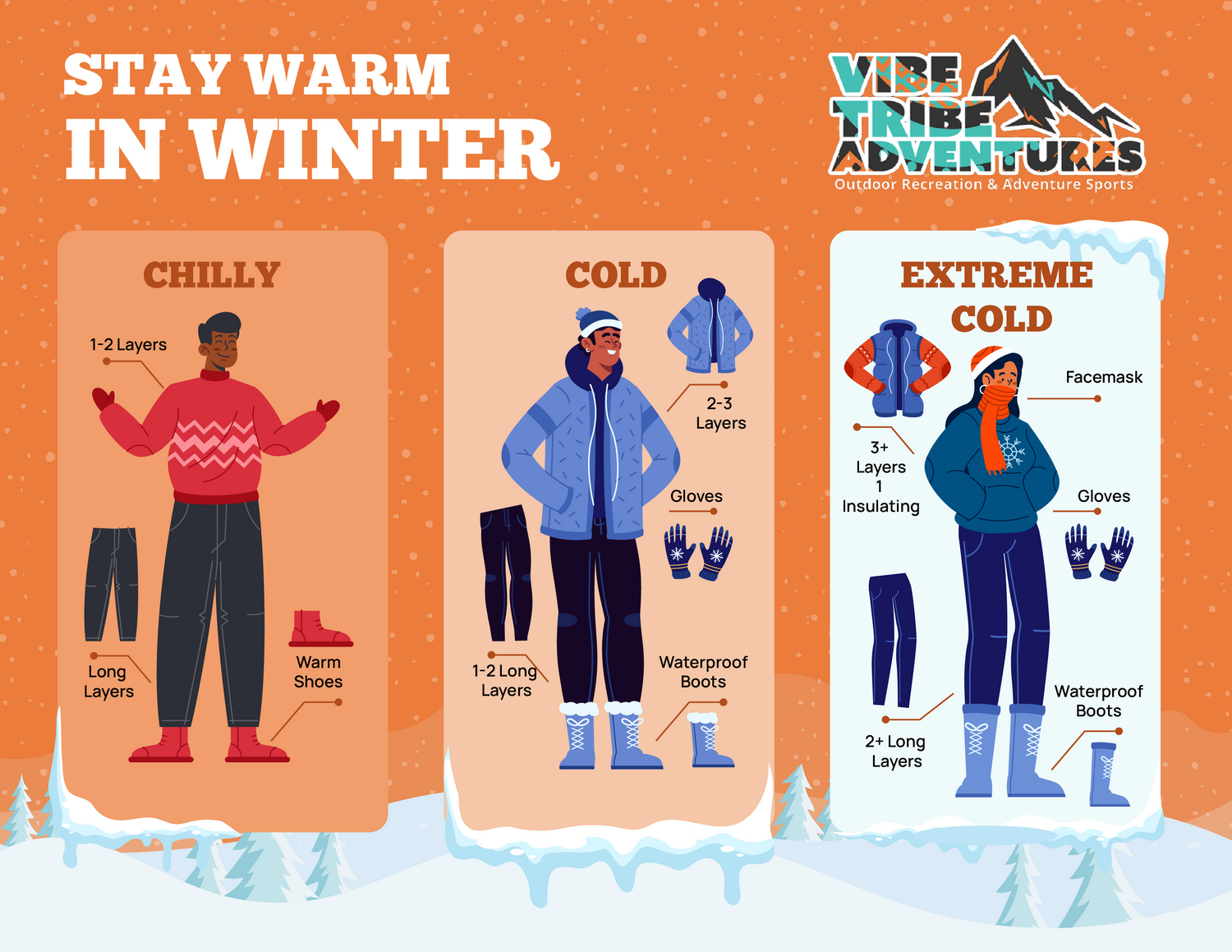
Staying Warm in Winter Outdoor Activities
Our Staying Warm in Winter infographic highlights essential tips to help participants stay safe, comfortable, and confident while enjoying outdoor adventures in cold-weather conditions. From proper layering and moisture management to protecting extremities like hands, feet, and ears, this visual guide breaks down how small preparation choices can make a big difference in winter environments. Whether hiking, snowshoeing, sledding, or participating in outdoor education programs, these strategies help reduce discomfort and prevent cold-related risks so participants can focus on learning, movement, and fun.